

ambivert
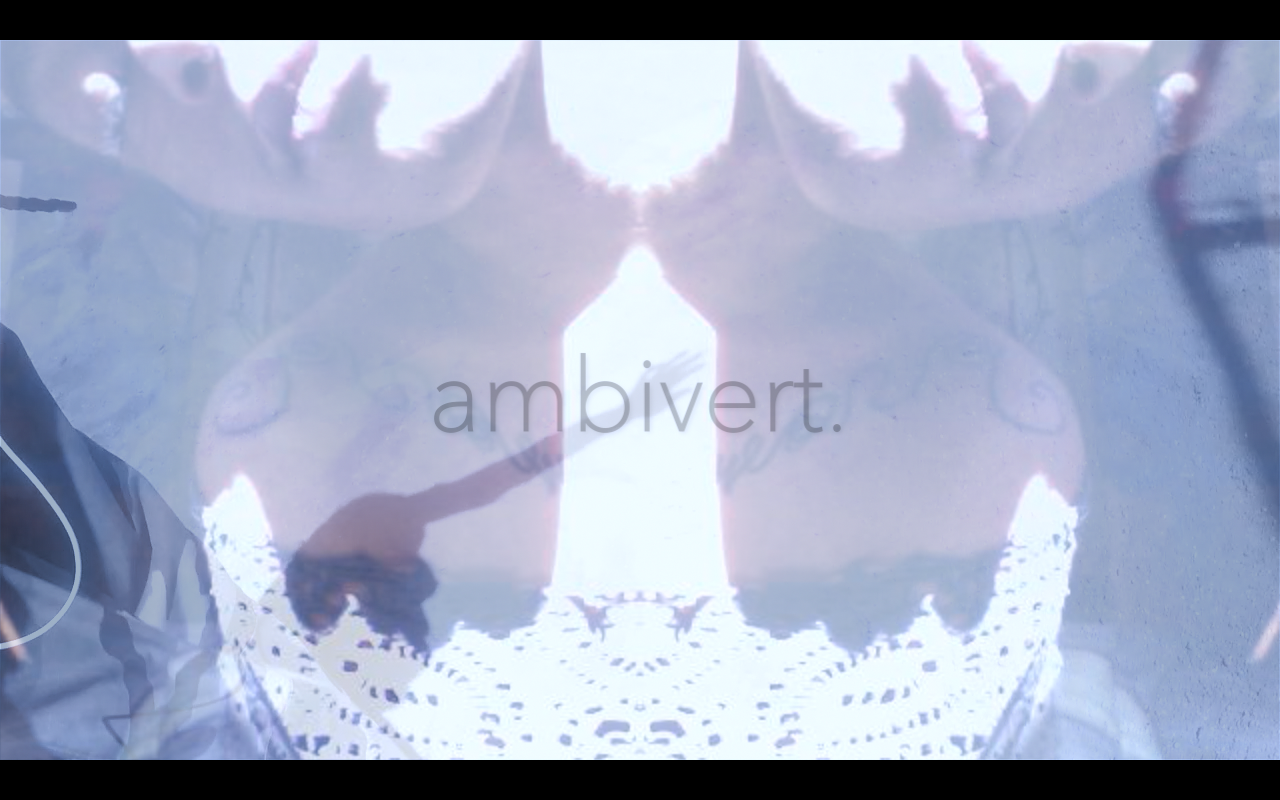
ambivert (2015)
Written, directed, edited and produced by: Aquarius Ester Alegria
An ambivert is both an introvert and extrovert. What is it like to inhibit this way of being?
Aquarius Ester Alegria takes us on a journey through her mind, body, and city in ambivert, a rich, dense, lush, and genre-defying film about living as an artist and mother with Fibromyalgia while managing the effects of emotional and spiritual trauma.
It is incredibly challenging to describe ambivert. OTV tried through a collaboration with Dr. Kevin Gotkin, at the time teaching a class at New York University on media, disability, and access. The audio described version of ambivert shows its incredible complexity. Layering videos and text, action and inaction, aquarius alegria represents ambiversion as a disorienting experience, where the boundaries between self and other, presence and absence, the city and the body collapse.
Aquarius shot initial footage of the film during a series of panic attacks in downtown Chicago. Overwhelmed with the crowds, compounded by chronic pain, Aquarius filmed herself dancing in various places as a means of therapeutic exposure.
The piece begins with a simpler image, however, grounding in some idea about who our protagonist “Estie” might be: “Trifling, chaos, DEMONIC, crazy” we say as text overlaid on an image of Estie blindfolded, smoke coming out of her mouth.
Scattered letters appear “DYKE OR DICK,” an external question, internalized in Estie’s life-long journey to define her sexuality. While overall taking a serious tone, ambivert dabbles in puns and humor. There is fun and whimsy amidst its exploration of very serious themes.
Chicago quickly emerges as a key character in the piece. Walking through the streets of her neighborhood, appearing as a shadow, Estie describes her city as “hell” and part of the “American colony” where “pale pink legs” stare at her.
“I have no privacy, that is not my privilege,” she says.
Much of the piece shows Estie moving and dancing throughout the city, from the bustling streets of Michigan Avenue, the contrasting traffic and calm of Lake Shore Drive, her quieter Roseland neighborhood on Chicago south side, and her apartment.
Throughout, we see how space and identity intermingle and co-create one another. Ambiversion becomes not a static state of being but a framework with which to understand how where we are shapes who we are and can be.
The burden of carrying the multiplicities of the self, particularly as a Black queer neurodivergent woman, is a consistent theme throughout. We see the ways that different parts of the city create different possibilities for being and the ways people of different identities treat estie, mostly in ways that constrain her agency, even to the point of surviving violence and harm.
“You are not mentally ill. Your hyper-awareness has been activated by an emotional trigger,” Estie says to herself.
What’s profound about ambivert is how, through the cacophony of external stimulation, Estie asserts her right to exist, her right to find peace wherever she is, even if she is not always successful. Some of the most striking images are of her dancing freely and unapologetically in some of the most crowded parts of the city, from outside the luxury department store Saks Fifth Avenue to the middle of Michigan Avenue.
ambivert is incredibly layered and complicated, just like human life, but what holds it together is aquarius e. alegria’s incredible bravery, in making this piece, releasing it to the world, and asserting her right to complexity in a world that would deny it. To me, ambivert is a dose of medicine. It heals those who watch it by encouraging us to bravely own all parts of ourselves and the spaces in which we exist.