

i. - LOVE // ME + Sur La Nuit
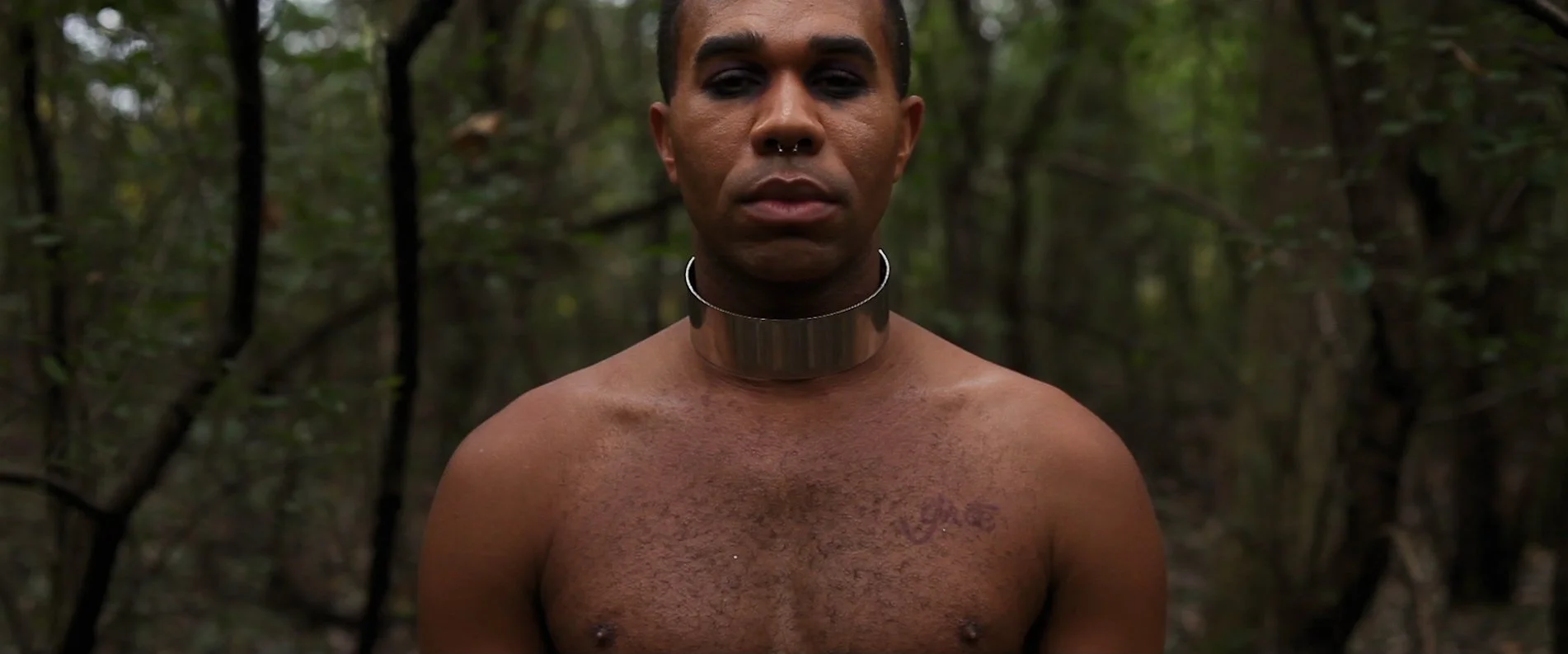
Watch Sur La Nuit and i. - LOVE // ME on OTV!
Sur La Nuit (2018) & i. - LOVE // ME (2019)
Created by: Alexa Grae
Who is Alexa Grae?
It’s the question their art prompts, but perhaps the better question is: can performance reveal more than it obscures?
In two unrelated experimental films released within two years, Alexa expanded OTV’s stylistic repertoire significantly bringing forms and genres to create something our community had never seen.
In Sur La Nuit, Alexa asks us to expand our understanding of opera, or as they have written, “the ‘idea’ of opera or the feeling of an opera.” Rigorously trained in the form, Alexa started coming into their own as an artist. Performing in underground spaces, they embraced their love of more popular forms of music, often quite separate from the high-minded classic genre. Sur La Nuit applies this questioning of opera to the idea of the performance film. Instead of lip synching as if it was a music video, Alexa focuses on movement and acting, leaving the audience to wonder: who is singing? With their impressive counter-tenor range, the audience might be convinced that the singer is someone, someone who appears as if they were assigned female at birth. The theme of disjuncture and irresolution undergird the entire piece as an assemblage of images, scenes, and movements that never feel finished. Alexa’s performance references the classical and modern, power and fragility, messiness and sterility, yearning and command. The sets have the baroque opulence of opera and the gritty punk aesthetics of contemporary art cinema. As a nonbinary artist, Alexa challenges gender, opera, pop, and R&B to create something entirely new.
The original poem was written by Alexa’s mother Connie and translated into French by their Aunt Valerie to provide some distance between the source material and the artists. The translation offered a specific vocal color palette inside which Alex was curious to search for expression. Changing the language supported their pursuit of mystery. They chose to leave some aspects in the dark and unresolved.
With the collaboration of Matthew Ozawa (director) and Jon Wes (videographer/editor) they attempted to capture what opera could feel like on video through a queer lens.
This sense of irresolvable duality is clear in i. - LOVE // ME, in which Alexa questions “ways//love// came to knowledge.”
A self love mantra in a matrix. The repetition of text is meant to open a portal of acceptance:
“I knew things wouldn’t ever change
if I keep loving me the same
and I just want to feel this love
now I know everything to gain”
This is a vocal gesture or spellcasting meant to ground in the self with the hope of altering one's surroundings.
The entire film unfolds as a cinematic Rorschach, the images split down the middle to create a mirrored effect. The result is we never see Alexa whole. They appear as a double, a twin of themselves adorned with colorful flowing wigs and costumes or in archival photos and images of their childhood. To love oneself is to never resolve identity into one but rather to embrace contradiction and duality, it seems the film argues.
“My art exists in the mystery, a cerebral place,” Alexa told me. “Carve out that space for yourself rather than trying to fit into other spaces that are not complex.”