

Full Out
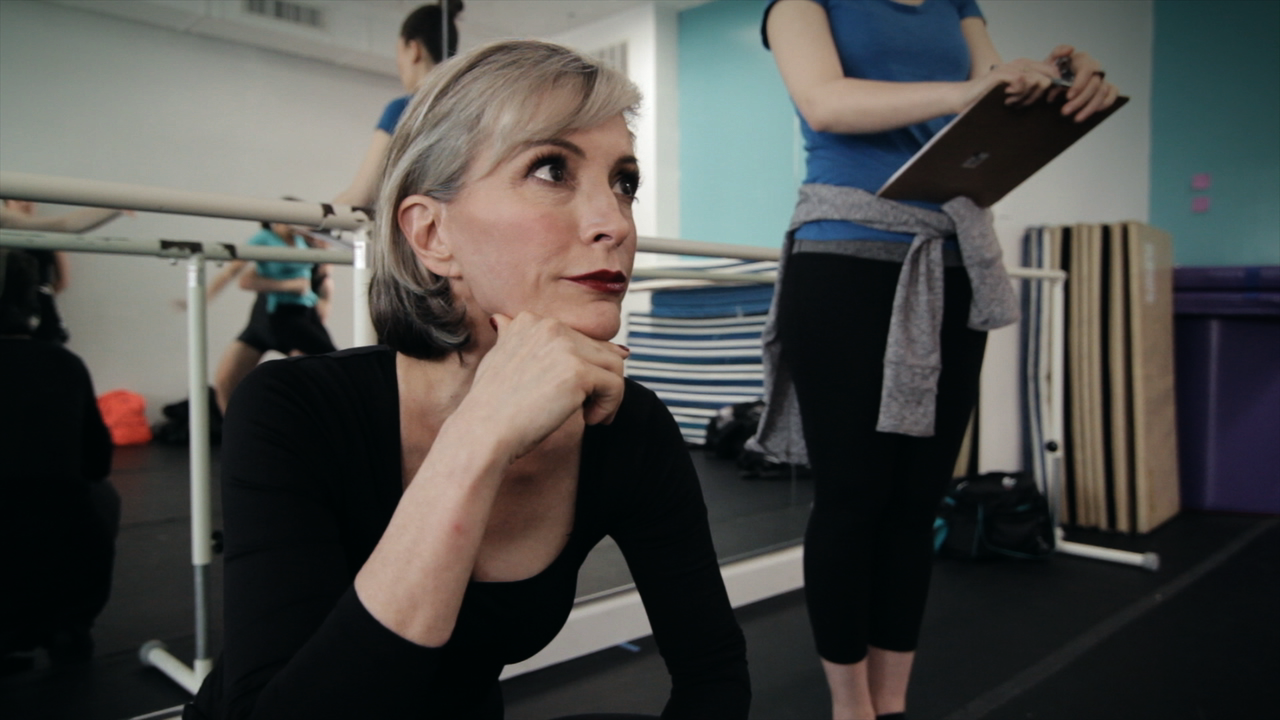
Full Out (2016)
Directed by: Jess King
Written by: Julie Keck
The dance world has been mined for drama for all of cinema history and led to some of the medium’s biggest hits.
Yet few have explored the inherent queerness in dance spaces, especially from the perspectives of women.
Veteran indie series creators Julie Keck and Jess King explore the dance world in one of their most ambitious projects (of many) in Full Out. The series takes viewers into Chicago’s modern dance community, a constellation of well-funded, legacy dance companies, such as the Joffrey and Hubbard Street, all the way to small, experimental or avant-garde efforts guided by Keyierra Collins, Jenn Freeman (Po'Chop), and Erin Kilmurray.
To amp up the drama, the series hinges on the artistic director of the company, Xan (Nana Visitor of Star Trek: Deep Space Nine fame). Xan is the kind of cold and calculating artistic director that makes for classic drama. In the beginning of the series, Xan pits two rising stars against each other for the lead spot: scrappy Taylor (Kaitlin Webster), who is out and proud, and closeted Claire (Jess Duffy), who is recovering from a potentially career-ending injury. Xan relishes poking at each dancer’s insecurities while holding opportunities just out of their reach. In one moment, Xan taunts Taylor, suggesting that her partially shaved head will ensure that the Joffrey will never hire her, despite her skill. Similarly, Xan slyly insinuates that she knows about Claire’s closeted lesbian life while forceteaming her with big promises: “Together we are going to put every rich flat white ass in that audience so that they can see your toned one on fire.” Ultimately, Xan gives Taylor the lead and makes Claire the understudy.
Across its five-episode arc, Full Out explores how the dancers in Xan’s troupe form solidarities and entangled relationships amidst this power structure, replete with ample “lesbian drama.” Throughout the series characters fall out in and out of lust with fellow company members and other partners while grappling with their personal demons, primarily their mental and physical health. Xan stokes the flames throughout, offering the dancers performance enhancing drugs and using their personal lives in bouts of creative manipulation.
In order to supplement a small budget and raise the production value, the Full Out team prioritized casting trained dancers over trained actors, with “Taylor” actor Kaitlin Webster also serving as the choreographer for the series.
I should note that Full Out marked some important milestones for OTV. It was the first series screened at what is now 10 years later the OTV Studio, our community space in Humboldt Park. At the time it was called Reunion, co-managed by OTV co-founder and executive director Elijah McKinnon and Kristen Kaza, known throughout Chicago for curating nightlife for queer women and trans/nonbinary people. In that way, the series represented a collaboration between community organizers with intersecting publics.
Full Out was also one of the most popular pilots released at the time, as it was embedded on StarTrek.com and fans flocked to see Nana Visitor.
Full Out stands out as a meta-critique on the creative process, how, in the process of developing and producing works of art, creatives are under often hidden pressures that are mental, emotional, and physical. As an indie series produced by established creators who have gone through this process many times in film, Full Out shows how harm is replete in creative industries but also how allowing artists to embrace their identities (gender, sexuality, etc.) can start to heal these deep wounds.