

Darling Shear
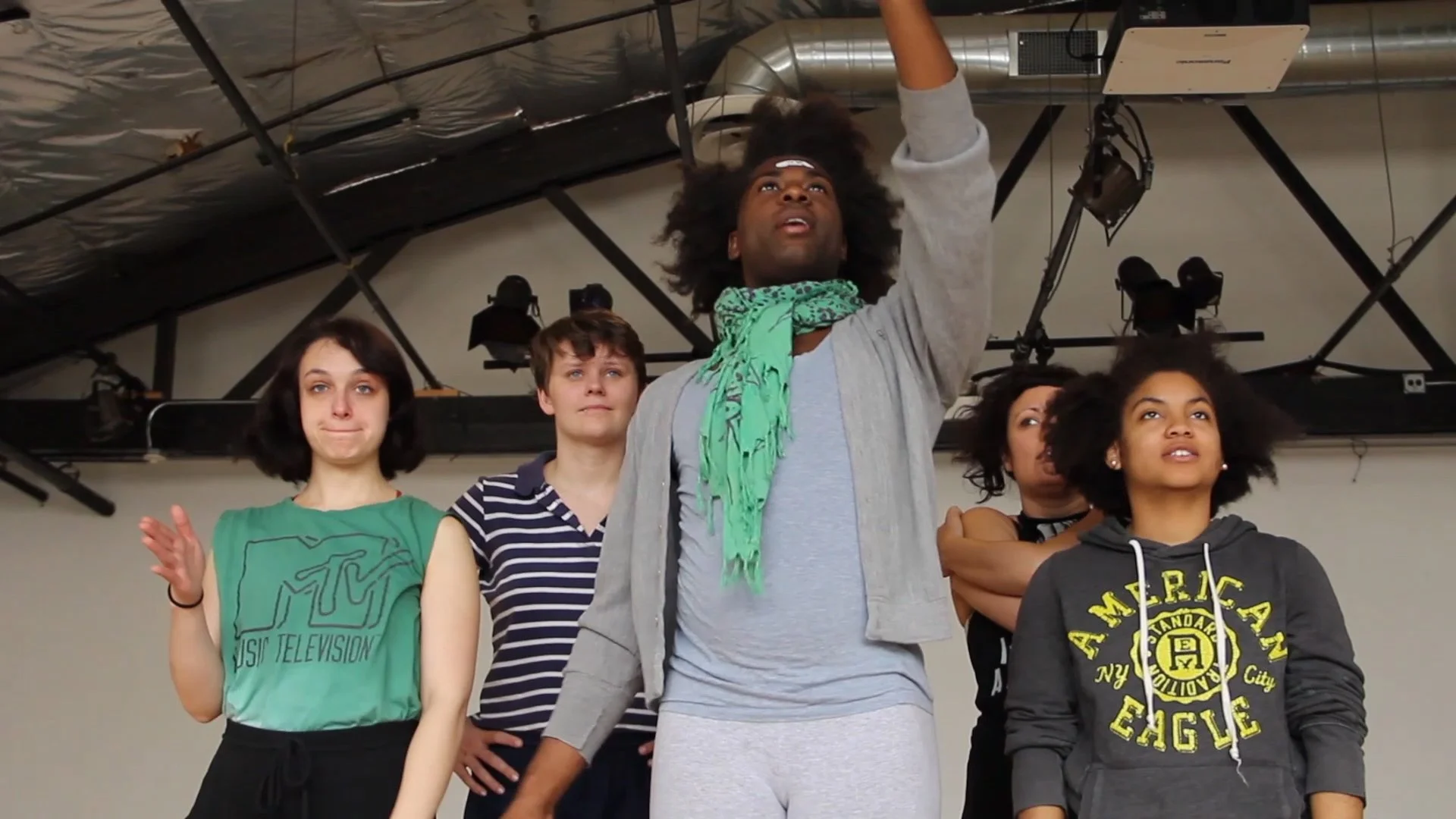
Darling Shear (2018-2023)
Starring: Darling Shear
Directed by: Diana Quiñones Rivera
Among the few documentary series on OTV, Diana Quiñones Rivera’s Darling Shear has to be one of the most significant for honoring an icon in Chicago’s arts scene.
Darling Shear is a choreographer and dancer known as a mainstay in Chicago and on OTV. Trained in jazz, ballet, modern and African dance traditions, Darling has been sought after for her ability to appeal to multiple audiences and cultures, and for her powerful yet elegant presence. She was the most featured guest during the six-year run of Salonathon, a weekly “open mic” that launched the careers of a generation of writers, performance artists, and more. She has regularly choreographed and starred in the Fly Honeys, a massively popular feminist burlesque event that has been running for over 10 years. She had performed in most of Chicago’s leading academic and art-based institutions.
As a Black trans queer person, Darling faces incredible barriers to making it in a dance world that privileges proximity to whiteness in appearance and form. Yet she has been carving a space for herself in Chicago’s alternative arts scene.
Diana’s ambitious two-season four-hour documentary series spotlights the development of Darling’s first primetime ensemble work at Links Hall, a hub in Chicago’s experimental performance community, Couer Enchanté (Enchanted Heart), created for the Co-mission residence at Links Hall. It was her first residency and an important step in being seeing an artist and not an entertainer in the Chicago dance world.
“Folks would ask if I was the ‘entertainment’ for the evening,” Darling told me. “Couer Enchanté was about the relationship that I was having within the dance world, but also, as a performer, not just performing in institutional dance spaces but also my relationship with doing burlesque, being a showgirl.”
It is a powerful question for a local celebrity to ask. Darling is frequently visible in Chicago’s arts scene, but being visible doesn’t mean being seen, known, or having the power to shape one’s career or legacy.
Darling reveals her life and process in the series. It is rare to see documentaries about Black trans people that are not focused on trauma, let alone one that focuses on their skills, work and craft. Diana primarily shows Darling choreographing, taking feedback, and working through the minutiae of the show. But we get glimpses into how Darling thinks about her place in the community and her relationships. Her complex feelings about her public persona, her need for open relationships to maintain it, and the walls she may put up because of it.
The people around her appear to be poking at those walls.
“You’re holding back,” advisor at Links Hall Kristina Isabelle tells Darling in the season two opener.
Couer Enchanté is in part Darling’s response to not being seen by the community, or, as she says: “Having my peers not look at me like a peer but as their entertainment.”
Throughout the final show, music and all the dancers stop to say, in a flat lifeless tone: “Let me entertain you.” It’s clearly sarcastic. They don’t sound like they have the desire to entertain. They sound tired.
“There was this conversation about who’s holding the power, the audience or the performer,” Darling later told me.
The series focuses on how Darling’s collaborators try to interpret her vision and grapple with the intimacy and complexities of the movement, the music, and their own racial and gender identities, which Darling’s work consciously disrupts. Diana gives every dancer a lot of time to talk about their own lives, their approach to dance, and their thoughts on the piece. Rashida Webb-Miller talks about being a full-figured woman in dance, the lack of respect and encouragement she received coupled with the increased attention, and how she doesn’t dance for many other people but how Darling is an exception. We see Tila Von Twirl talking about how she learned dance from her mother, a dance professor, intercut with scenes of her mastering between burlesque and jazz in various settings. Andy Slavin discusses the highs and lows of their gender journey, meditating on how they’ve navigated gendered expectations in dance – because men always lift, they pride themselves on that and do it in the last show. Alix Schillaci reveals multiple traumas of family members dying, personal injuries and neurodivergences.
Despite creating a show with intense themes and complex politics, Darling was able to curate and cultivate a healing ensemble experience. “We have this growing love for each other,” Aaliyah Christina said. “We automatically clicked. We all move very differently, but we also have this really large understanding of each other. We all enjoy each other’s company, whether we’re dancing or not.”
Each dancer is then featured in the show, led by Darling, who mostly dances with them and has few solo moments. Couer Enchanté uses midcentury American jazz and pop music – “that’s my thing,” Darling says earlier – to ask if there are ways to refract their meaning through a Black trans and queer vision.
“It’s going to come off differently because I’m not a white person telling you to do these things,” Darling said, noting the power of re-appropriating the exact choreography of these iconic films from someone who has not historically had access to owning that IP. “It was an appreciation. I grew up with these musicals. These things that you grow up with don’t always age well.”
“There is a thing of working through trauma through dance. Take that discomfort and use it.”
The beginning is a joyful crowdpleaser about romantic flirtation and discovery, but the tone shifts as the piece goes on.
A pivotal moment comes with a duet of sorts between Alix and Darling, set to Eartha Kitt’s “Oh John! (Please Don’t Kiss Me).” Alix exudes pathos, with jerky movements and sudden freezes, that convey deep unease, and Darling mirrors it, spending much of the dance with her body to the wall, joining all the other dancers who are doing the same. Here, we see how important it was to hear Alix tell their own story in their own words, as we can imagine how their personal trauma gives them the range to portray these complex emotions.
Couer Enchanté ends with Darling bowing multiple times to the dancers in the show, as they were angels or key parts of herself to whom she owes a debt. They embrace her in a group hug, but she quickly slips away, off stage, leaving them with each other.
She frees herself.